5 Reasons America Hasn't Bought Bitcoin for Its Strategic Reserve Yet
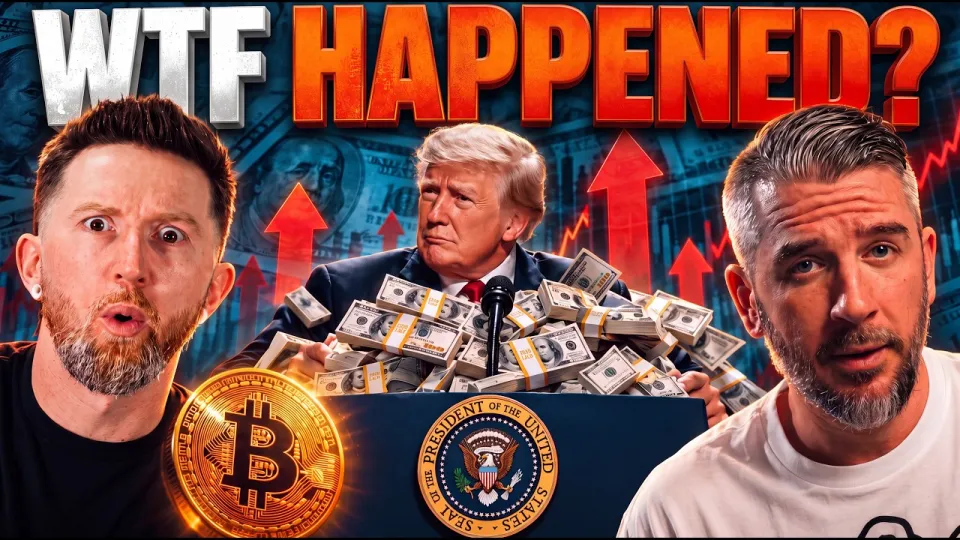
Video: LEAKED: Here's The REAL Reason America Hasn't Bought Bitcoin For its Strategic Reserve...
You can order the same kind of articles for your own video to boost it on YouTube and Google. Just message the Telegram bot @sat_sit_bot. It writes articles around your video, embeds the video and publishes them on popular niche websites (no ads). Free trial — 50 articles.
· based on the channel Simply Bitcoin
Key takeaways
- The US Strategic Bitcoin Reserve was created by executive order from seized assets, not open-market purchases, so no new bitcoin has been bought with taxpayer money.
- Any purchase must be budget-neutral, meaning funds have to come from reallocated budgets or asset forfeiture rather than new deficit spending.
- Buying at scale would move the market against the government, so execution has to be slow, OTC-based and spread over time.
- Custody, audit and security of a national bitcoin stockpile remain unresolved, with no confirmed institutional framework for holding coins.
- Political and legislative timing, including clarity on stablecoin and market-structure rules, is a precondition before Congress funds acquisitions.
America has not bought bitcoin for its Strategic Reserve because the program was designed to hold seized coins rather than make open-market purchases, and any buying must be budget-neutral, pass custody and audit checks, and avoid moving the market against the government. In practice, that means the reserve exists on paper, but the acquisition mechanism, funding source and political green light are still missing.
What the Strategic Bitcoin Reserve actually is
The reserve is a stockpile built from bitcoin the US government already controlled through law-enforcement seizures, not a purchase program. The executive order that created it directed agencies to consolidate existing holdings instead of selling them off, which is why the reserve appeared without a single dollar of new spending. That distinction matters: a reserve of forfeited assets needs no congressional appropriation, while buying new coins does.
The practical consequence is that the headline number people quote is a custody figure, not a demand figure. No new bitcoin has been removed from the market by the US Treasury on purpose, and the coins in the reserve were already off the market before the policy existed. Until a funding line is attached, the reserve is a vault, not a buyer.
Reason 1: Budget neutrality blocks open-market buying
The binding constraint is arithmetic: purchases must be budget-neutral, so the money has to come from reallocated budgets, asset forfeiture proceeds or sales of other assets rather than deficit spending. A government that funds itself through borrowing cannot simply print a line item for bitcoin without a political fight over priorities.
That is why the discussion keeps returning to mechanisms like revaluing the gold certificate account at the Treasury, shifting funds between agencies, or redirecting seized-asset proceeds. Each option requires legal review and, in most cases, congressional sign-off. The panel walks through how quickly that machinery moves at 12:40, and the answer is measured in quarters, not weeks.
Reason 2: Market impact makes a big buy self-defeating
A sovereign buyer of any size faces a simple problem: announcing a purchase moves the price before the order fills. If the US said it would buy hundreds of thousands of coins at once, sellers would reprice instantly and the taxpayer would pay the top. The workable approach is over-the-counter accumulation, discreet execution and a schedule spread across months or years.
That is also why officials avoid giving numbers. A stated target becomes a trading signal, and a stated deadline becomes leverage for anyone holding coins. The conversation at 27:15 makes the point bluntly: the less the market knows about size and timing, the better the fill. For retail investors, this means the reserve is unlikely to arrive as a single announcement-driven spike.
Reason 3: Custody, audit and security are unresolved
Holding a national bitcoin stockpile raises questions no agency has fully answered: who holds the keys, how the coins are audited, what happens if keys are lost or compromised, and how the holdings appear on a balance sheet. A reserve that cannot be independently verified is a liability, not an asset.
There are also legal questions about whether the Treasury or another custodian should hold coins directly, use a qualified third-party custodian, or rely on multi-signature arrangements with multiple agencies. Each model changes the audit trail and the insurance profile. Until a framework is published, a large purchase would create an asset the government could not confidently account for.
Reason 4: Politics and legislative sequencing come first
Buying bitcoin requires a vote, and votes follow political capital. Lawmakers are still working through stablecoin and market-structure legislation, and many in Congress want those frameworks settled before they consider direct acquisitions. Sequencing matters: rules for digital assets create the legal ground on which a purchase can stand.
There is also the optics problem. A politician who authorizes buying a volatile asset with public money owns every drawdown until the next election. That is why supporters frame the reserve as a hedge against currency debasement and opponents frame it as speculation. The discussion at 41:50 treats the legislative calendar as the real bottleneck, not technical readiness.
Reason 5: The reserve is a signal, not yet a buyer
Even without purchases, the reserve changes behavior. It tells foreign governments and institutions that the largest economy will not sell seized bitcoin and is studying a strategic position, which lowers the political risk of holding bitcoin elsewhere. Signaling costs nothing and buys time.
For investors, the practical takeaway is to watch three markers: a published custody and audit framework, a named funding source that satisfies budget neutrality, and a congressional vote that authorizes acquisition. Any one of those alone is noise; all three together would mean the reserve is becoming an actual buyer.
Common questions and doubts from the audience
The most frequent pushback is that the reserve is a nothing-burger because no coins were bought, and that criticism is fair as far as it goes. The counterargument is that the policy prevents forced sales of seized coins and establishes a legal precedent that a future administration can build on. Viewers also ask why the government does not simply buy quietly, and the answer is that quiet buying at scale still requires appropriations, custody and audit approval, all of which are public processes.
A related doubt is whether the reserve is a disguised bailout for early holders. It is not: the coins were seized, not purchased from the market, so no public money has gone to sellers. The open question is what happens if the government ever does buy, because at that point the market-impact and fairness arguments become real rather than theoretical. The panel's back-and-forth at 58:05 captures both sides without resolving them.
Bottom line
The US Strategic Bitcoin Reserve is real but dormant as a buyer: it holds seized coins and waits for a funding mechanism that satisfies budget neutrality, a custody and audit framework, and a congressional vote. Until those three arrive, announcements about the reserve are signals rather than demand. The Simply Bitcoin breakdown with Rustin, Hurley and Opti is the clearest walkthrough of why the buying has not started, and the trio's mix of intensity and calm makes the mechanics easy to follow. Watch the funding and custody markers, not the headlines.
Source: LEAKED: Here's The REAL Reason America Hasn't Bought Bitcoin For its Strategic Reserve... · Markdown version
Questions & answers
Has the US government actually bought any bitcoin for its Strategic Reserve?
No. The reserve was created from bitcoin already seized in law-enforcement actions, and no open-market purchases have been funded. Buying would require a budget-neutral funding source and, in most readings, congressional authorization.
Why not just buy quietly to avoid moving the price?
Quiet buying at sovereign scale still requires appropriations, custody arrangements and audit approval, all of which are public processes. Even discreet over-the-counter execution needs a legal funding line before the first coin is bought.
Does the reserve mean the government will never sell its seized bitcoin?
The policy directs agencies to consolidate and hold seized coins rather than auction them off, which removes a recurring source of supply. It does not legally forbid sales in every scenario, so the framework still matters.
What should investors watch to know the reserve is becoming a real buyer?
Three markers: a published custody and audit framework, a named funding source that satisfies budget neutrality, and a congressional vote authorizing acquisition. One alone is noise; all three together signal real demand.